
My creative process is best described as structured experimentation.
I don’t start with rigid frameworks or fully formed plans. I start with ideas—often messy, half-shaped, and unresolved. I throw things at the wall, see what resonates, and pay close attention to what creates energy or sparks meaningful conversations. From there, refinement begins.
Over time, patterns emerge. Those patterns inform structure. And structure eventually becomes a system. The system isn’t the starting point—it’s the outcome.
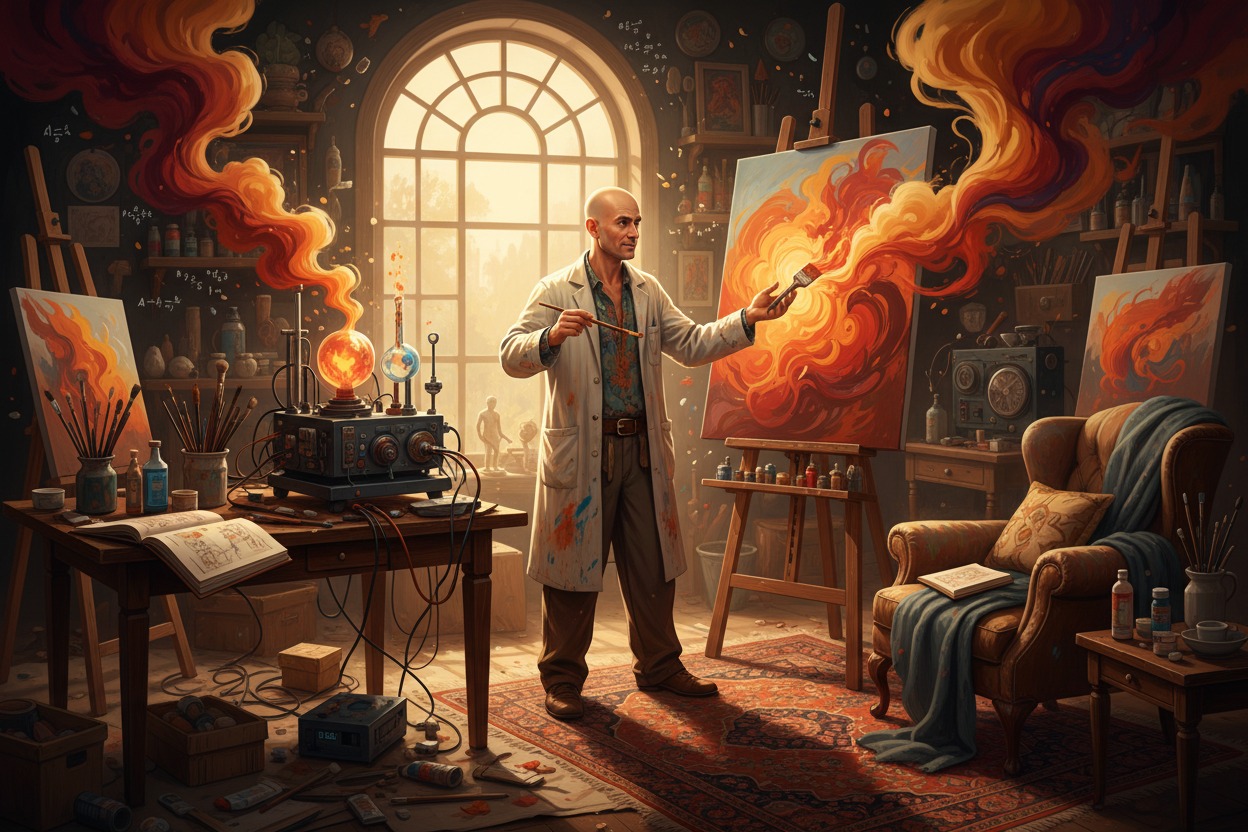
Embracing the Messy Beginning
Early-stage ideas rarely arrive clean or complete. They show up as questions, hunches, or loosely connected thoughts. I’ve learned not to rush that phase. Letting ideas breathe creates room for unexpected connections and stronger outcomes later.
Rather than forcing clarity too soon, I use exploration as a filter. What keeps coming up? What do people respond to? What feels worth returning to? Those signals help separate passing ideas from ones with real potential.
Collaboration Comes First
I do my best work with other people involved.
Multiple perspectives surface blind spots faster and improve decisions earlier in the process. Collaboration isn’t something I add once things are polished—it’s foundational from the beginning. Conversations, feedback, and shared problem-solving shape ideas in ways that solo work rarely can.
Whether I’m working with teammates, partners, or peers, I value collaborative environments where ideas can be challenged, strengthened, and refined collectively. It leads to more resilient systems and better results.
Validation Through Action
I don’t believe ideas are proven in theory alone—they’re proven through use.
Whenever possible, I like to run ideas at least once. That might look like informal conversations, small pilot projects, test events, or simple A/B experiments. The goal isn’t perfection—it’s information.
Real-world feedback reveals what resonates, what confuses people, and what needs to change. Acting early reduces risk later and helps ensure that what’s being built actually serves its intended audience.
AI as an Accelerator, Not a Substitute
I use AI as a creative accelerator, not a replacement for thinking.
AI helps me externalize ideas quickly, explore variations, and create early drafts or visual context that make concepts easier to share. It’s especially useful for getting thoughts out of my head and into a form others can react to.
That said, judgment, curiosity, and synthesis remain human responsibilities. AI supports the process—it doesn’t define it. The goal is speed with intention, not automation for its own sake.
From Ideas to Systems
As ideas are tested and refined, structure naturally follows.
What begins as experimentation evolves into frameworks that others can understand, use, and build upon. These systems make work repeatable, scalable, and easier to sustain over time—without losing the creativity that sparked them in the first place.
Clarity Is the Measure of Success
Ultimately, my creative process is measured by clarity.
Clarity in purpose.
Clarity in communication.
Clarity in how ideas move from concept to reality.
When people understand what’s being built, why it matters, and how they can engage with it, the process has done its job.
Leave a Reply